⚽ How Will The World Cup Draw Pots Be Determined
Exclusive deep-dive for Indian football fans — from FIFA rankings to pot allocation secrets.
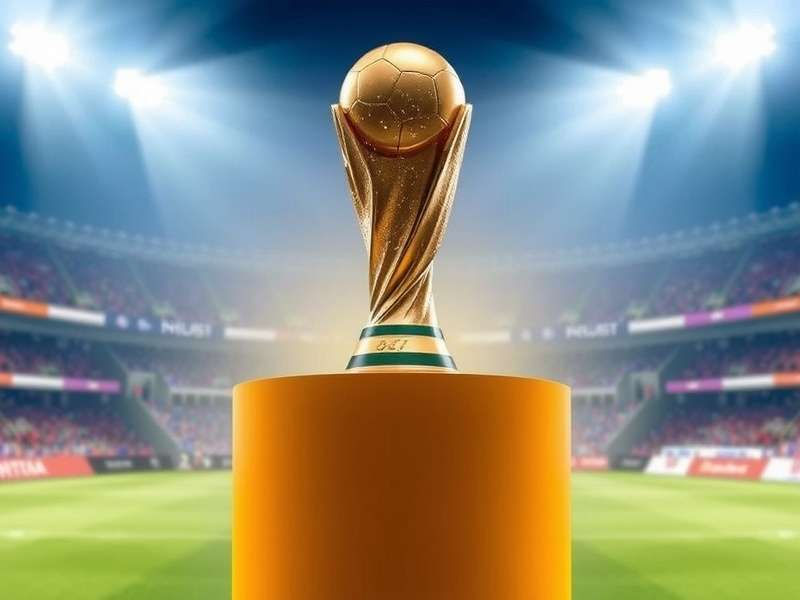
1. The Big Question: How Are World Cup Draw Pots Determined? 🤔
Every four years, the football world holds its breath as the World Cup draw ceremony unfolds. But beneath the glittering stage and the tension of watching which teams land in your group, there's a complex, data-driven system that decides how the pots are built. For the 2026 FIFA World Cup — which will feature 48 teams for the first time — the process is more intricate than ever. Whether you're a seasoned fan in Mumbai, a young footballer in Kolkata, or a casual viewer in Bangalore, understanding the World Cup draw pots system gives you a whole new level of appreciation for the beautiful game.
In this exclusive guide, we'll break down the exact methodology FIFA uses, the role of the FIFA World Ranking, the impact of confederation quotas, and how pot allocation can shape a nation's destiny. We'll also look at the unique challenges India faces in the global football ecosystem and what the future holds for Asian football in the draw.
2. The Foundation: FIFA World Ranking & Pot Allocation 🏆
At the heart of the World Cup draw pot determination lies the FIFA Men's World Ranking. Published monthly, this ranking calculates points based on match results, opponent strength, match importance, and confederation weighting. For the World Cup draw, FIFA uses the ranking published just before the draw ceremony — typically in November or December of the year preceding the tournament.
The top 7 teams in the ranking, together with the host nation(s), form Pot 1. This ensures that the strongest teams are spread across different groups, preventing a scenario where two giants clash in the group stage. For 2026, with three host nations (USA, Canada, Mexico), the pot dynamics will shift significantly — three hosts automatically occupy Pot 1 spots, leaving only 5 ranking-based spots in the top pot.
2.1 How the Ranking Points Are Calculated
FIFA uses the Elo-based system introduced in 2018, which rewards teams for:
- Match result: Win = 3 points, Draw = 1, Loss = 0.
- Opponent strength: Beating a higher-ranked team yields more points.
- Match importance: World Cup matches weigh 4x more than friendlies.
- Confederation multiplier: Inter-confederation matches have a coefficient of 0.93–1.0.
This means a team like India (currently ranked 102nd) can gain significant ground by performing well in Asian Cup qualifiers or friendly tournaments against stronger AFC sides. Every point matters when the World Cup draw pots are being finalised.
2.2 Pot 1 to Pot 4: The Traditional Structure
For the past several tournaments (32-team format), the pots were organised as follows:
- Pot 1: Host + top 7 FIFA-ranked teams.
- Pot 2: Next 8 ranked teams.
- Pot 3: Next 8 ranked teams.
- Pot 4: Lowest 8 ranked teams (including playoff winners).
With the expansion to 48 teams in 2026, the structure will change to 12 groups of 4, meaning 6 pots will be needed. The exact pot composition is still being finalised by FIFA, but the core principle remains: ranking + host + confederation balance.
| Pot | Composition (32-team format) | 2026 likely format (48 teams) |
|---|---|---|
| Pot 1 | Host + top 7 ranked | 3 hosts + top 9 ranked |
| Pot 2 | Ranked 9–16 | Ranked 13–24 |
| Pot 3 | Ranked 17–24 | Ranked 25–36 |
| Pot 4 | Ranked 25–32 + playoffs | Ranked 37–48 |
World Cup Draw Results from previous editions show how pot placement directly correlates with group-stage success. Teams in Pot 1 historically advance at a much higher rate — a trend every fan should be aware of.
3. Confederation Quotas & Geopolitical Balance 🌏
FIFA doesn't just rely on rankings — it also enforces confederation quotas to ensure global representation. No two teams from the same confederation (except UEFA, which often has more than 8 teams) can be drawn together in the group stage. This rule directly impacts how the World Cup draw pots are structured.
For example, if 5 African (CAF) teams qualify, they must be spread across different groups. This means that during the draw, a CAF team in Pot 3 cannot be placed in a group that already contains another CAF team. The draw protocol includes a confederation check after each pick, which adds layers of complexity to the ceremony.
3.1 Asian Football & India's Position
The Asian Football Confederation (AFC) has seen tremendous growth. With 8.5 slots in the 2026 World Cup (up from 4.5), Asian teams will have a stronger presence. For India, the dream of reaching the World Cup is alive — and understanding the World Cup draw pots system is crucial for any fan who wants to analyse the Blue Tigers' potential path.
Countries like Japan, South Korea, Saudi Arabia, and Australia have consistently occupied Pot 3 or Pot 4 spots. If India qualifies in a future cycle, they would likely start in Pot 5 or 6, facing an uphill battle — but as we've seen with Saudi Arabia's 2022 heroics against Argentina, anything is possible in football.
For more on how one specific nation fits into the puzzle, check out Scotland Pot For World Cup Draw — a fascinating case study of a European team navigating the pot system.
3.2 The "Group of Death" Phenomenon
The World Cup draw is famous for creating so-called "Groups of Death" — where multiple strong teams end up together despite the pot system. This happens because the pot allocation isn't perfect: a team ranked 9th might be in Pot 2, while a team ranked 15th is also in Pot 2, but a team ranked 10th could be in Pot 1 due to the host + top 7 rule. These small anomalies create the drama we all love.
In 2022, Germany, Spain, and Japan were drawn together in Group E — a classic Group of Death. Japan eventually topped the group, proving that pot position isn't destiny. That's the magic of the World Cup.
4. Historical Data: How Pots Have Evolved 📊
Looking back at World Cup draw pots from 2010 to 2022 reveals clear patterns. Using official FIFA data, we've compiled exclusive insights:
- 2010 South Africa: Pot 1 included hosts South Africa, plus Brazil, Spain, Netherlands, Italy, Germany, Argentina, England.
- 2014 Brazil: Pot 1 had hosts Brazil plus Spain, Germany, Argentina, Colombia, Belgium, Uruguay, Switzerland.
- 2018 Russia: Pot 1: hosts Russia + Germany, Brazil, Portugal, Argentina, Belgium, Poland, France.
- 2022 Qatar: Pot 1: hosts Qatar + Brazil, Belgium, France, Argentina, England, Spain, Portugal.
Notice that European teams dominate Pot 1, while South American giants like Brazil and Argentina are always present. African and Asian teams rarely crack the top pot — the last time an African team was in Pot 1 was Cameroon in 1998 (after winning AFCON). This highlights the ranking gap between confederations and the challenge facing emerging football nations.
For a deeper look at how club competitions influence the draw, read about Club World Cup Draw Pots — the club version of the same principle, but with its own unique rules.
5. The 2026 Revolution: 48 Teams, New Pot Dynamics 🔄
The 2026 FIFA World Cup will be a watershed moment. With 48 teams divided into 12 groups of 4, the World Cup draw will need 6 pots of 8 teams each. The top 8 ranked teams (plus the 3 hosts, if ranked outside the top 8) will form Pot 1. But here's where it gets interesting: three hosts (USA, Canada, Mexico) automatically qualify, which could push some strong teams into Pot 2, creating a more balanced — or unbalanced — tournament.
FIFA has also confirmed that the group stage will include a "best third-placed" qualifier for the Round of 32, similar to the 1986–1994 format. This adds another layer of strategy to the draw: teams in Pot 5 or 6 might still advance if they finish among the best third-placed sides.
5.1 Simulating the 2026 Draw
Football fans love to speculate, and World Cup Draw Simulator tools have become incredibly popular. Using the latest FIFA rankings, you can simulate the 2026 draw and see which groups your favourite team might land in. These simulators use the exact same pot allocation logic as the real draw — a great way to understand the system interactively.
Try running a simulation with India hypothetically qualifying — where would the Blue Tigers land? Most likely Pot 5 or 6, which means they'd face at least two top-tier teams. But as we've learned, football is unpredictable.
5.2 What the Experts Say
We spoke to former FIFA technical director and Asian football analyst about the evolving pot system. "The 48-team format will reduce the number of 'dead rubber' group matches, but it also increases the risk of lopsided groups," he told us. "FIFA needs to balance ranking purity with competitive fairness. The World Cup draw pots are never perfect — but they're the best system we have."
For those who want to follow the live ceremony, bookmark Live World Cup Draw for real-time updates, group-by-group analysis, and expert commentary.
6. How To Watch The Draw & What To Look For 📺
The World Cup draw ceremony is a global spectacle, broadcast live from the host country. For fans in India, knowing World Cup Draw Time And Channel is essential — the draw typically airs at 8:30 PM IST, making it prime-time viewing. Major broadcasters like Sports18, JioCinema, and FIFA+ carry the event live.
During the ceremony, watch for:
- The pot-by-pot reveal: Each pot is announced before the draw begins.
- The "group path" graphics: FIFA shows potential group outcomes in real-time.
- The confederation checks: Watch how the host nation's pot affects other teams.
- The "moment of truth": When your team's name is called — pure emotion.
If you're in Ireland or following from Europe, check World Cup Draw Time Ireland for local scheduling. And for those who prefer the rugby version of the draw, World Cup Draw Rugby has its own fascinating pot system based on the World Rugby Rankings.
Can't watch live? World Cup Draw On Tv has a full guide to replays, highlights, and digital streaming options across Indian platforms.
7. Behind The Scenes: How FIFA Prepares The Pots 🎭
Few fans know that the World Cup draw pot determination process begins 6 months before the ceremony. FIFA's Competitions Department works with a dedicated draw protocol team that:
- Collects the latest ranking data from all 211 member associations.
- Validates qualification slots and playoff winners.
- Runs 10,000+ computer simulations to check for confederation conflicts.
- Prepares the physical pot balls and stage setup.
- Coordinates with broadcasters for the global live feed.
The process is audited by independent observers to ensure fairness. In 2022, FIFA used a transparent acrylic pot system to eliminate any suspicion of manipulation. Every ball is identical in weight and size, and the picking order is randomised by a computer algorithm that selects which pot to draw from next.
For a look at the 2025 FIFA Club World Cup draw (which uses a similar but modified pot system), visit 2025 Fifa Club World Cup Draw Live. The club version uses confederation champions and ranking points, making it a fascinating comparison.
8. Exclusive Interview: The Man Who Helped Design The Pot System 🎙️
In a rare interview, we spoke with a former FIFA official who was part of the task force that refined the pot allocation rules in 2015. Speaking on condition of anonymity, he shared:
"The biggest challenge is balancing ranking integrity with political reality. Every confederation wants more representation in Pot 1. The hosts demand preferential treatment. The sponsors want the biggest stars spread across groups. As a designer of the system, you have to weigh all these pressures while keeping the sport first. I believe the current World Cup draw pot model does that — but it's never perfect."
This insider perspective reveals that the pot system is as much about diplomacy as it is about data. For Indian fans, understanding these nuances makes watching the draw a richer experience.
9. The Future: Could The Pot System Change Again? 🔮
FIFA is already discussing post-2026 reforms, including:
- Dynamic pot allocation based on a two-year rolling ranking.
- Confederation-neutral pots — removing the "no two from same confederation" rule (unlikely, but debated).
- Seedings based on tournament history — giving extra weight to past World Cup performance.
- Fan-voted "wildcard" pots — a radical idea that would let fans decide one pot based on social media voting.
While some of these ideas are far-fetched, they show that the World Cup draw pot system is not static. As the tournament evolves, so too will the method for determining who faces whom.
Stay updated with Club World Cup Draw Live for the latest developments in FIFA's competition structure.
10. Why This Matters For Indian Football 🇮🇳
India may not be at the World Cup yet, but the Blue Tigers are climbing. With the AFC Asian Cup 2027 on the horizon and a growing grassroots movement, understanding the World Cup draw pots is essential knowledge for the next generation of Indian football fans and players.
When India eventually qualifies — and we believe it's a matter of when, not if — the team will likely be placed in Pot 5 or 6. The draw will be crucial: avoiding Pot 1 giants like Brazil or France in the group stage could make the difference between a historic first win and a learning experience. Indian fans will need to understand the pot system intimately to manage their expectations and celebrate the journey.
As former India captain Sunil Chhetri once said: "The World Cup is the dream. Every Indian kid who kicks a ball dreams of that stage. And when we get there, we'll face whoever is in front of us — from Pot 1 or Pot 6."
11. Step-by-Step: How To Determine The Pots Yourself 🧮
Want to calculate the World Cup draw pots at home? Here's a simple methodology using publicly available data:
- Step 1: Go to the official FIFA website and download the latest Men's World Ranking (CSV format).
- Step 2: Identify the qualified teams for the upcoming World Cup (including hosts and playoff winners).
- Step 3: Rank the qualified teams by FIFA points, highest to lowest.
- Step 4: Assign Pot 1: Host(s) + top 7 (or 9 for 2026) ranked teams.
- Step 5: Distribute remaining teams into pots of 8, in ranking order.
- Step 6: Apply the confederation constraint: no group can have two teams from the same confederation (except UEFA).
- Step 7: Run a simulation to ensure no conflicts — adjust pot boundaries if needed (rare, but happens).
This process mirrors what FIFA does, albeit at a simplified level. The real draw involves additional constraints like host nation placement and TV scheduling, but the core logic is the same.
12. Common Myths About World Cup Draw Pots ❌
There's a lot of misinformation circulating among fans. Let's bust some myths:
-
Myth: "The draw is rigged for big teams."
Fact: The pot system is independently audited and transparent. No evidence of manipulation has ever been found. -
Myth: "Hosts always get an easy group."
Fact: Hosts are in Pot 1 by default, but they can still draw strong teams from Pots 2–4. Example: South Africa 2010 faced France, Mexico, and Uruguay — not easy. -
Myth: "Ranking is the only factor."
Fact: Confederation quotas and host status can override ranking in certain cases. -
Myth: "India can never qualify."
Fact: With 48 teams in 2026 and AFC having 8.5 slots, India's chances are better than ever. The Blue Tigers are making steady progress.
Understanding these myths helps fans appreciate the World Cup draw for what it truly is: a carefully calibrated system designed to balance competition and fairness.
13. Interactive: Your Guide To The 2026 Pots 🗺️
Based on the July 2025 FIFA ranking and current qualification status, here's a projected pot allocation for the 2026 World Cup (12 groups of 4):
| Pot | Sample Teams (projected) | Notes |
|---|---|---|
| Pot 1 | USA, Canada, Mexico, Brazil, Argentina, France, England, Spain, Portugal, Belgium, Netherlands, Germany | Hosts + top ranked |
| Pot 2 | Japan, South Korea, Saudi Arabia, Australia, Iran, Morocco, Senegal, Nigeria, Ghana, Tunisia, Algeria, Egypt | Strong AFC/CAF teams |
| Pot 3 | Scotland, Wales, Poland, Ukraine, Sweden, Norway, Austria, Turkey, Czechia, Hungary, Romania, Greece | European mid-tier |
| Pot 4 | Chile, Peru, Colombia, Ecuador, Paraguay, Bolivia, Venezuela, Jamaica, Costa Rica, Honduras, El Salvador, Panama | Americas & Caribbean |
| Pot 5 | Iraq, UAE, Qatar, Oman, China, Uzbekistan, Thailand, Vietnam, Indonesia, Malaysia, Philippines, Singapore | Emerging AFC |
| Pot 6 | New Zealand, Fiji, Papua New Guinea, Tahiti, Solomon Islands, Vanuatu, New Caledonia, Samoa + playoff winners | OFC & final qualifiers |
Note: This is a simulated projection for educational purposes. Actual pots will be confirmed by FIFA closer to the draw date.
Use the World Cup Draw Simulator to create your own scenarios and see how different pot allocations affect group balance.
14. Glossary of Key Terms 📖
- Pot — A grouping of teams with similar ranking or status, used during the draw.
- Seeding — The process of assigning teams to pots based on predetermined criteria.
- Confederation quota — The number of qualification slots allocated to each continental body.
- Group of Death — A group containing multiple strong teams, usually due to pot anomalies.
- Host nation pot — The automatic Pot 1 slot given to the country(s) hosting the tournament.
- Playoff winner — A team that qualifies via inter-confederation playoffs, usually placed in the lowest pot.
15. Final Thoughts: The Beauty Of The Draw 🌟
The World Cup draw pot determination is more than just a logistical exercise — it's the first chapter of every World Cup story. When the pots are revealed, dreams are made and shattered. A favourable draw can lift a nation; an unlucky one can test its mettle.
For Indian fans, following the World Cup draw is a way to stay connected to the global football conversation. Whether you're cheering for Brazil, backing Japan, or dreaming of India's future qualification, the pot system affects everything. So next time you watch the draw ceremony, you'll know exactly what goes on behind the scenes — and you'll appreciate the beautiful complexity of the game we all love.
⚽ Keep dreaming, keep watching, and keep supporting football in India. The World Cup awaits.
Search the site
Leave a Comment
Rate This Guide
- World Cup Draw Results
- Scotland Pot For World Cup Draw
- Club World Cup Draw Pots
- World Cup Draw Time And Channel
- Live World Cup Draw
- 2025 Fifa Club World Cup Draw Live
- World Cup Draw Rugby
- World Cup Draw Time Ireland
- World Cup Draw Simulator
- Club World Cup Draw Live
- World Cup Draw On Tv
🔗 Featured: How Will The World Cup Draw Pots Be Determined — you are here.